

 Perfect winelands hideaway for small ...
The Bothey is “spoiled self-catering” in spacious suites



| Monday to Sunday, 10am to 4.30pm. The largest exhibition of bronze statues anywhere in the world. | |
 | 079 879 7880 |
 | Century City |
 | info@longmarchtofreedom.co.za |
 | longmarchtofreedom |
Last updated: Tuesday, 26 May 2026
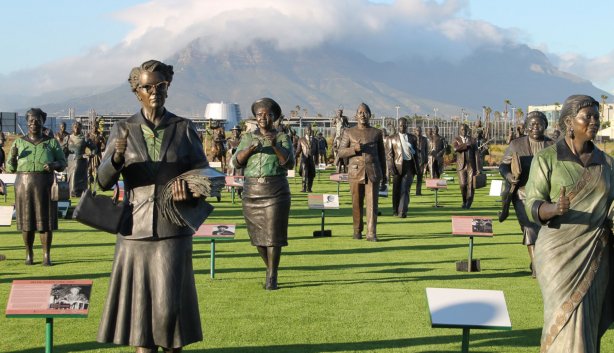
Every great city has a landmark that helps you understand its story. In Paris, it’s the Eiffel Tower. In New York, it’s the Statue of Liberty, and in Cape Town, it's Long March to Freedom. The ever-growing sculpture park of 100 life-size bronze statues, with new interactive experiences for reflection, quite literally walks you through the story of South Africa's road to democracy. If you want to understand this country beyond the surface, this is where you begin.
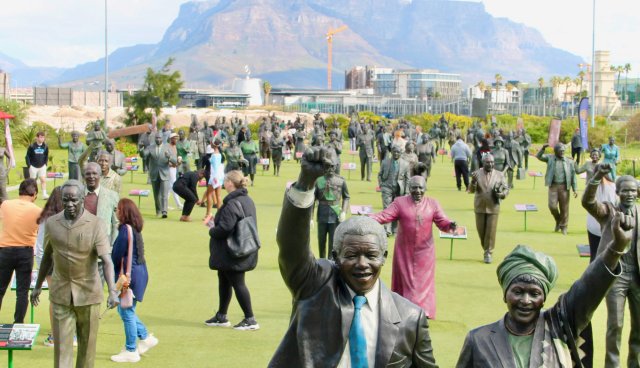
It takes four to six months to sculpt and cast one life-size bronze statue. Image: Long March to Freedom
Long March to Freedom was envisioned by Dali Tambo, son of anti-apartheid activist Oliver Tambo. During a visit to his father’s grave, he said: “There isn’t a statue of you in this country, and I’m planning to make one.”
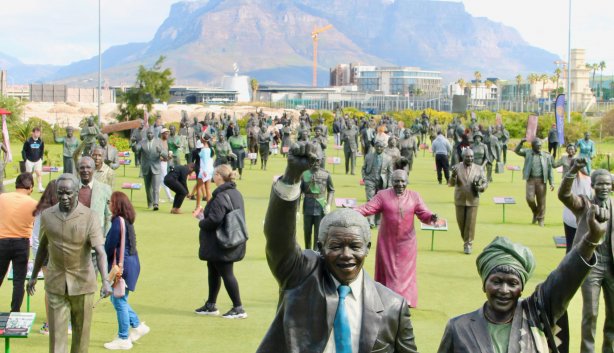
The result is the largest bronze exhibition of its kind in the world. Long March to Freedom features 100 life-size bronze statues of international and local leaders, warriors, and activists who contributed to South Africa’s liberation.
It’s a collection that’s ever-growing; Archbishop Tutu, Johnny Clegg and Kader Asmal have been added in the last two years.
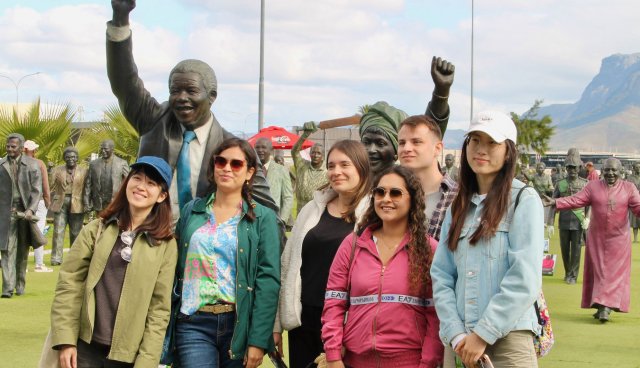
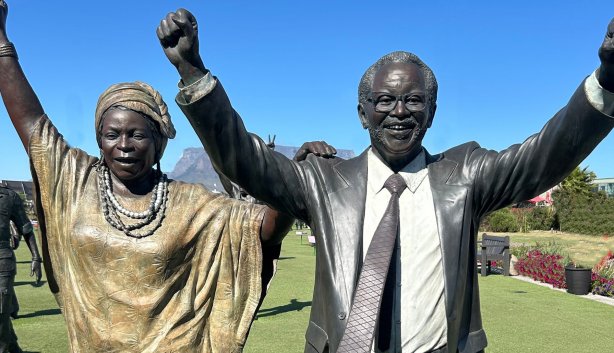
It brings together a fragmented history in a way that feels human and personal. Image: Long March to Freedom
Visitors start at the back of the exhibit, walking through the statues chronologically. You begin beside Khoekhoen leaders from the 1600s, walk past Xhosa and Zulu kings Maqoma and Shaka, and end at more recent figures like Nelson Mandela, Winnie Madikizela-Mandela, and Adelaide Tambo.
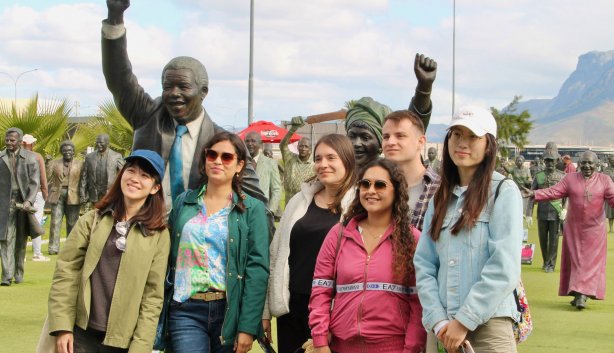
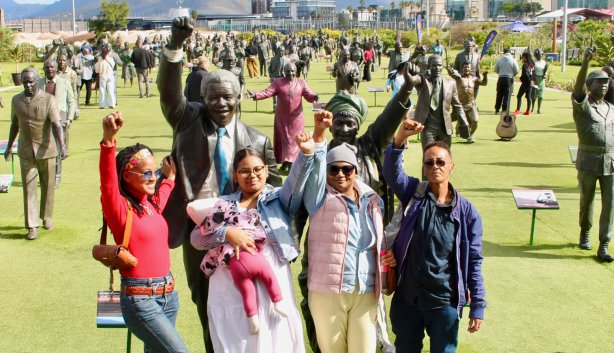
The statues are positioned walking forward, marching towards freedom. There are no glass cases or barriers; the figures stand at eye level and can be touched, making the experience more immersive than a traditional museum.
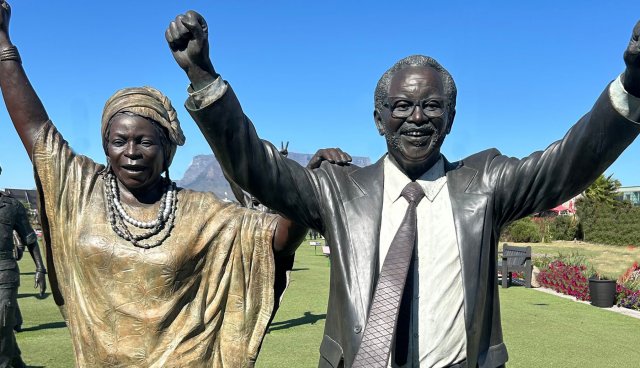
The statues are made of bronze, with splashes of colour drawing attention to clothing or objects in their hands. Image: Long March to Freedom
After a guided or solo tour, most locals leave surprised: “I didn’t realise how much I didn’t know,” some say. For example, visitors are usually shocked that a white man, Jack Hodgson, co-founded uMkhonto weSizwe, the former paramilitary wing of the African National Congress.
The impact is as palpable for internationals, who are looking for cultural experiences beyond the obvious tourist sites.
Learning about figures like singer Miriam Makeba, the founder of the Irish Anti-Apartheid Movement, Professor Kader Asmal, and Basil D'Oliveira, the cricketer who became a symbol of racial integration in sports, expands their knowledge of the country in new ways.
To meet all of the heroes, see our guide to the statues at Long March to Freedom.
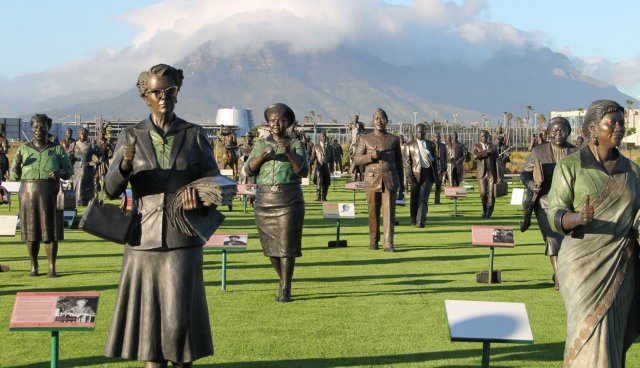
Rather than observing history, you feel like you are walking alongside it. Image: Long March to Freedom
“Visitors always say ‘I didn’t expect to feel so much,’” says Long March to Freedom Director Sarah Haines. The stories shared during the tour can be challenging or thought-provoking, and the Rotary Peace Garden, filled with fynbos and benches, offers a space for reflection.
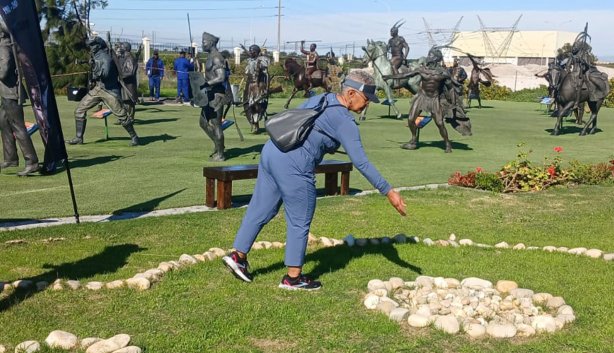
So does the Isivivane, one of the exhibition’s most powerful spaces. In many traditions, placing a stone on a cairn, known in isiZulu as Isivivane, symbolises thanks and prayers.
Long March to Freedom’s Isivivane was inspired by Queen Balleng Mphahlele from Limpopo, who, while walking through the procession, felt moved to pray for the country and asked for a place where she could leave a stone as a blessing for healing and unity.
Today, visitors stand quietly before placing a stone onto the cairn, with many describing a sense of connection to their ancestors and culture.
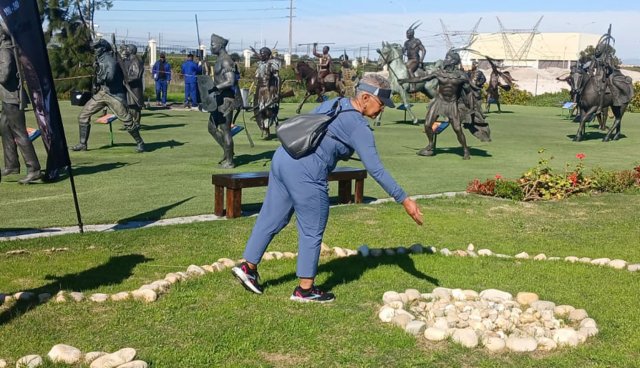
These elements create a space to reflect and feel connected to our history. Image: Long March to Freedom
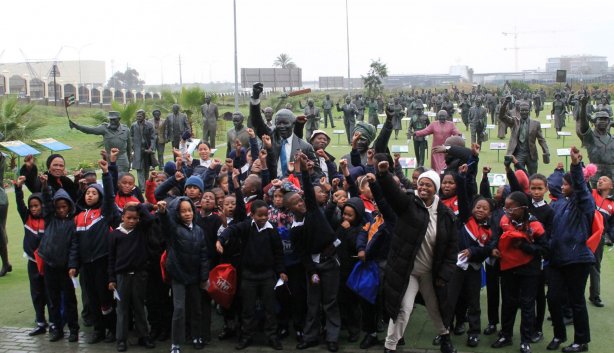
The statue garden doesn’t just share this history; it also engages with the current realities. Long March to Freedom’s sponsored school program has covered free visits for over 14 000 learners and counting. Students learn in an immersive way, which many under-resourced learners don’t have the opportunity to do.
After a tour, lesson, and treasure hunt through the exhibition, learners stand and share what they’ve discovered, often making personal connections to their own history.
“Classes with behavioural issues leave more disciplined because the learners can see themselves in these figures and realise they could become somebody,” says Luvuyo Zulu, teacher at Sinenjongo High School.
For how to support the school program, contact schools@longmarchtofreedom.co.za.
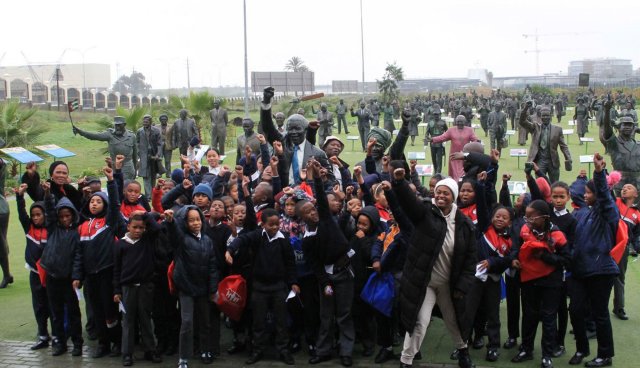
They help younger generations connect with history in a meaningful way. Image: Long March to Freedom
Out of hundreds of Google Reviews, Long March to Freedom has a 4.8 star rating, with incredible reviews like:
The statues come to life
“Learning through the life-size bronze statues is incredibly powerful. It genuinely feels like these historical figures come to life for a moment.” - Thandokazi Magopheni
Must-see for locals and tourists
“I was in awe at the quality of the bronze works and attention to detail. The passion of the guides is also evident.” - Adrian Ephraim
No amount of photos can do the statues justice
“Their real-life size is so realistic. For anyone interested in South African history, this is a must-visit.” - Stephen Ryan
Deeper appreciation for my country
“Hearing about the sacrifices, struggles, and courage of the people who fought for our freedom gave me a much deeper appreciation for our country and its history.” - Jamie Pieterson
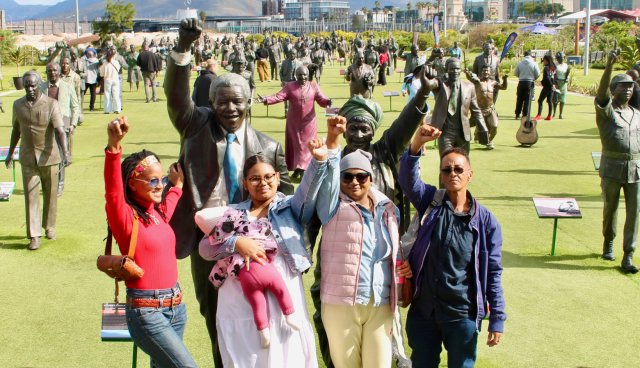
Many South Africans know parts of the country’s history, but few have experienced it in this way. Image: Long March to Freedom
Guided 45-minute tours are led by the exhibition’s storytellers. For South African citizens and residents, entry is subsidised at R20 and guided tours at R75.
It offers visitors a powerful way to engage with the history, struggle and resilience that brought South Africa to where it is today.
Long March to Freedom is open: Monday to Sunday & public holidays, 10am to 4.30pm
Find it: Century Boulevard, Century City, Cape Town
Cost: R20 (locals - self-guided tour) to R75 (internationals - guided tour)
Book: Via Webtickets
Contact on: 079 879 7880, info@longmarchtofreedom.co.za
By Saarah Gierdien
---
We’ve found 30+ free and cheap things to do with kids.
Discover freaky and fascinating museums in Cape Town.
Looking for something to do this weekend? Check out 7 things to do this weekend.
---
Loved discovering this? Make sure you get our popular weekly newsletter. Follow and like us on Twitter ❤ Facebook ❤ LinkedIn ❤ Instagram ❤ Pinterest for updates.
Perfect winelands hideaway for small ...
The Bothey is “spoiled self-catering” in spacious suites
 Your winter bucket list at the V&A ...
Aquarium sleepover, cruises, parties & 10+ food specials
 Sophisticated private event space in ...
Bespoke menus, wine pairings, and timeless interiors
 Rooftop clubhouse with yoga, sauna, ...
It’s open from 7am to 5.30pm. 5 reasons to go Light House Holistic
 Pear Tree, the tiny Hermanus bistro ...
Breakfast poké bowls, egg and kimchi tacos, and fresh juices
 Brewery with food specials every single ...
Daily deals on classic comfort meals like burgers, schnitzel, ribs, steaks…
 Cool taproom with amazing happy hour & ...
Craft beer tasting trays, burgers for just R60, R35 happy hour pints


© 2005 - 2026 Cape Town Magazine PTY Ltd. All rights strictly reserved [2005 - 2026].