\n');
}
function hideDIV(element) {
document.getElementById(element).style.visibility = 'hidden';
}
function showDIV(element) {
document.getElementById(element).style.visibility = 'visible';
}
// BG IMAGES
//onmouseout="setDIVBG('NavQuickQuote', '');" onmouseover="setDIVBG('NavQuickQuote', 'images/btn_quickquote_over.jpg');"
function setDIVBG(element, imgURL) {
if(imgURL == '') {
document.getElementById(element).style.background = '';
} else {
document.getElementById(element).style.background = 'url('+imgURL+') no-repeat top center';
}
}
function ctmGoto(URL) {
if(URL != '') {
location.href = 'http://www.capetownmagazine.com/' + URL;
}
}
isRegionOpen = true;
function toggleRegions() {
if(isRegionOpen) {
document.getElementById("RegionPop").style.visibility = 'visible';
document.getElementById("RegionPop").style.display = 'block';
isRegionOpen = false;
} else {
document.getElementById("RegionPop").style.visibility = 'hidden';
document.getElementById("RegionPop").style.display = 'none';
isRegionOpen = true;
}
}
isAdPopUP = true;
function toggleAdPopUP() {
if(isAdPopUP) {
isAdPopUP = false;
document.getElementById("AdPopUP").style.display = 'block';
document.getElementById("AdPopUP").style.visibility = 'visible';
} else {
isAdPopUP = true;
document.getElementById("AdPopUP").style.display = 'none';
document.getElementById("AdPopUP").style.visibility = 'hidden';
}
}
function openBanner() {
if (MM_FlashCanPlay) {
//alert('Hello');
//var flashMovie=getFlashMovieObject("headerBannerFlash");
//flashMovie.Play();
document.getElementById("TwinShortImage").style.display = 'none';
document.getElementById("TwinShortImage").style.visibility = 'hidden';
document.getElementById("HeaderAdPopUP").style.display = 'block';
document.getElementById("HeaderAdPopUP").style.visibility = 'visible';
document.getElementById("InnerHide").style.display = 'block';
document.getElementById("InnerHide").style.visibility = 'visible';
}
}
function getFlashMovieObject(movieName)
{
if (window.document[movieName])
{
return window.document[movieName];
}
if (navigator.appName.indexOf("Microsoft Internet")==-1)
{
if (document.embeds && document.embeds[movieName])
return document.embeds[movieName];
}
else // if (navigator.appName.indexOf("Microsoft Internet")!=-1)
{
return document.getElementById(movieName);
}
}
function toggleCenterBanner() {
document.getElementById("HeaderAdPopUP").style.display = 'none';
document.getElementById("HeaderAdPopUP").style.visibility = 'hidden';
document.getElementById("TwinShortImage").style.display = 'block';
document.getElementById("TwinShortImage").style.visibility = 'visible';
}
function MM_swapImgRestore(itemNo) { //v3.0
if(is_selected_item != itemNo) {
var i,x,a=document.MM_sr; for(i=0;a&&i
a unique social project every month,
have a look in Pulse
in the left navigation. to the future.
![]()
Wildlife & Nature

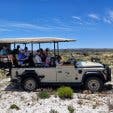
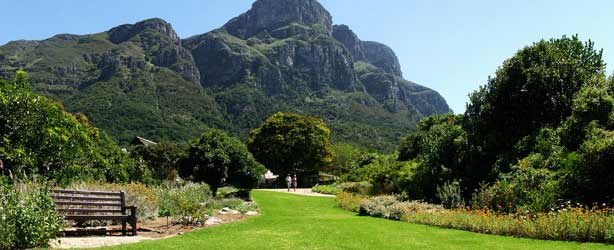
The South African National Parks' nine-month report to December
31 shows that the Kruger National Park received the most visitors, 1
005 012, and the Table Mountain National Park, 1 001 123.
The Tsitsikamma National Park was in third place, with 113 368
visitors. This national park, however, received the highest percentage
of foreign guests (55,7 percent). It was followed by the Addo Elephant
National Park (48,2 percent) in the Eastern Cape and the Bontebok
National Park (44,5 percent) in the Western Cape.
According to SANParks, the latest tourism figures show that the
percentage of black South Africans among visitors to national parks run
by SANParks has increased across the board to 19,7 percent from an
estimated four percent in 2003.
Of the 14 major national parks featured in the report (excluding
the Table Mountain National Park) the Mapungubwe National Park in
Limpopo leads the pack, with black people accounting for an impressive
62,2 percent of its guests. Of the Golden Gate National Park's
visitors, 22,8 percent were black people and of the Kruger National
Park's, 21,4 percent.
Other national parks, including the Augrabies Falls in the
Northern Cape and the Addo Elephant, have also significantly improved
their figures. The figures also confirmed that most of the people
visiting the national parks were South Africans, Mabunda said. Latest
figures show that 74,6 percent of visitors are South African. The rest
are international, 24,8 percent, or from other Southern African
Development Community countries, 0,6 percent.
Source: The Cape Times 17 Feb 2006
More Table Mountain in Cape Town:
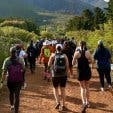
Hiking the third Hoerikwaggo Trail in Cape Town
![]()
![]()
![]()
![]()
![]()
![]()
![]()
![]()
![]()
People
![]()
![]()
![]()
![]()
Accommodation
![]()
![]()
![]()
![]()
Wine & Dine
![]()
![]()
![]()
![]()
Out!
![]()
![]()
![]()
![]()
Social
![]()
![]()
![]()
![]()
On the Move
![]()
![]()
![]()
![]()
Real Estate
![]()
![]()
![]()
![]()
Sport & Fifa 2010
![]()
![]()